What Makes a Stone Slab Lifter a Long-Term Investment?
04/08/2026
Equipment Engineering Insights
What Makes a Stone Slab LifterA Long-Term Investment?
Looking beyond working load limit and purchase price to understand what truly creates long-term value in stone handling operations.
Aardwolf Engineering Team•Published Technical Guide•5 Min Read
Many lifting devices can complete a single lift. However, not every slab lifter continues to deliver value after years of daily operation.
When selecting a stone slab lifter, businesses often compare the working load limit, grip range, and purchase price. While these specifications are important, they rarely tell the whole story. When several products meet the same basic requirements, the real difference lies in how they perform after thousands of lifting cycles.
At that point, value is measured not only by the ability to lift materials, but also by its impact on productivity, material protection, maintenance costs, and overall operational efficiency.
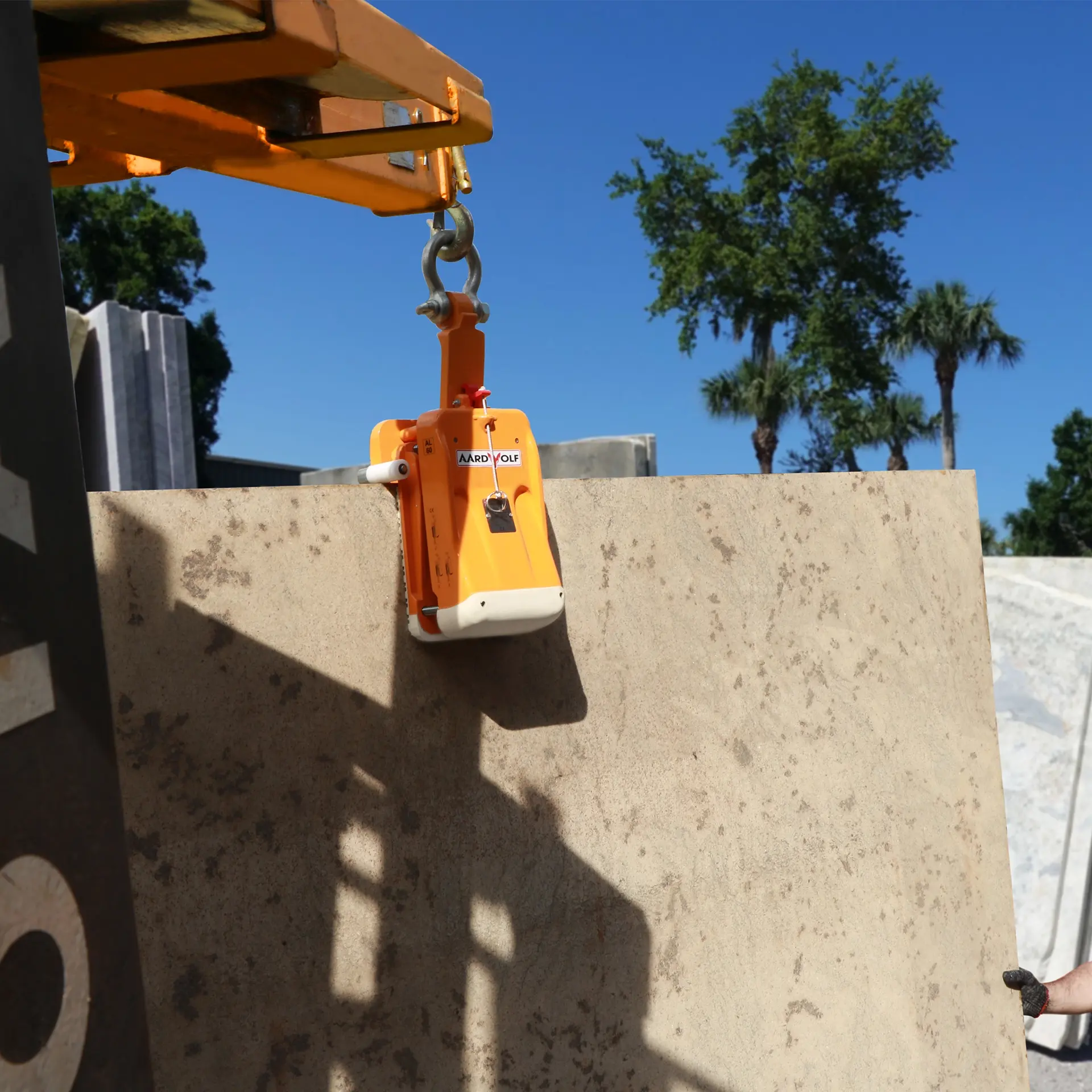
In The Field
High-Capacity Vertical Lifting
Aardwolf Slab Lifter performing high-capacity vertical lifting with precision stabilization.
Figure 1: Consistent load balance minimizes positioning micro-delays during outdoor stone yard operations.
The Hidden Cost of Every Lift
In day-to-day stone handling and material handling operations, productivity is affected not only by major equipment failures but also by countless small interruptions repeated throughout every shift.
!Micro-Interruptions That Accumulate Costs:
Repositioning the clamp repeatedly because the center of gravity shifts during load attachment.
Lowering and lifting the load again because it is not balanced properly for smooth transport.
Making additional adjustments before placing delicate material accurately onto cutting tables or A-frames.
Each interruption may take only a few seconds or minutes. However, when repeated dozens or even hundreds of times each week, they gradually accumulate into a significant operating cost.
These interruptions are difficult to measure individually, yet they directly affect productivity, project schedules, and the efficient use of labor and equipment. The real value of a slab lifter therefore lies not in making a single lift faster, but in reducing unnecessary adjustments and maintaining a consistent, predictable workflow over many years of operation.
Protecting Materials Also Protects Productivity and Profitability
Natural stone, engineered quartz, sintered stone, and other slab materials represent a significant investment, particularly after cutting, fabrication, or finishing for a specific project.
For this reason, the cost of a damaged slab extends far beyond the material itself. A chipped edge or a crack may require rework, delay installation, and create additional costs throughout the remaining stages of production.
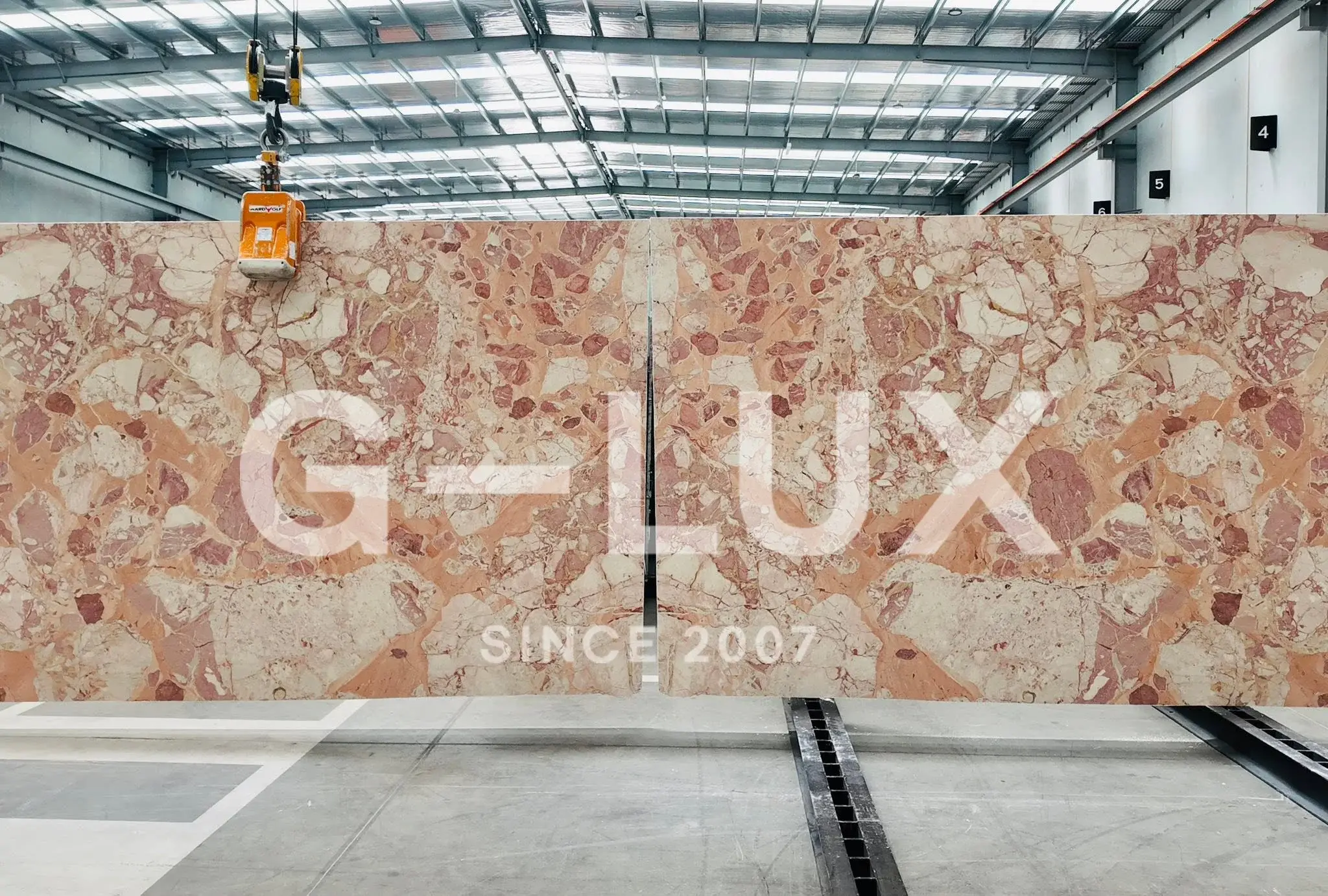
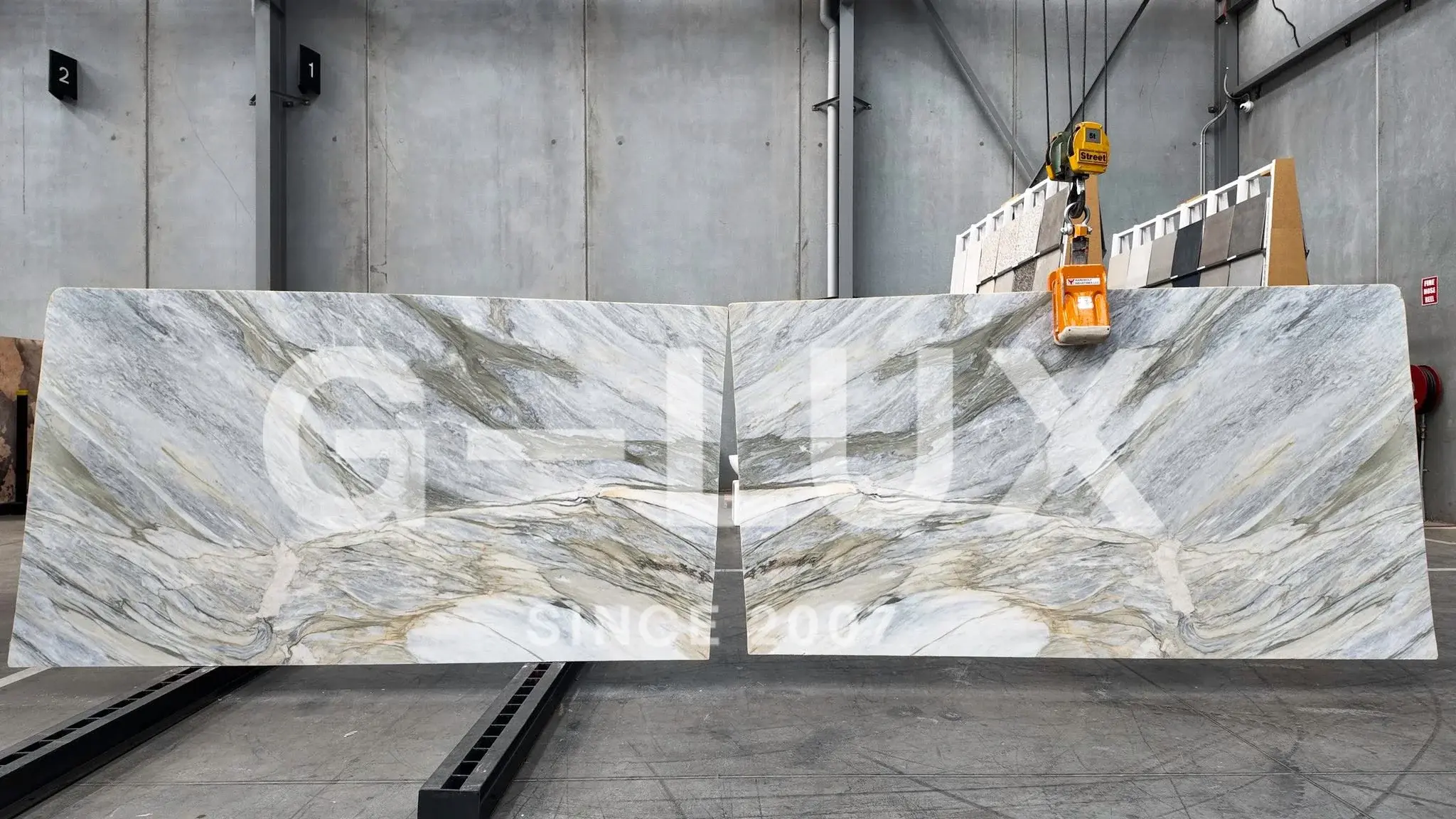
High-Value Stone Handling
Zero Surface Damage Engineering
Handling fragile, high-value veined natural stone requires uniform surface contact across the entire jaw face.
Figure 2: Precision surface clamping on exotic marble slabs.
A well-engineered stone lifting clamp helps keep the material stable throughout the lifting process, reducing the risk of edge chipping or surface damage when used correctly.
Protecting the material also means protecting project schedules, controlling costs, and preserving the value already added during previous fabrication processes.
What Really Creates Long-Term Value?
At first glance, many stone slab lifting clamps appear similar in design and specifications. However, the most important differences often lie inside the mechanism and in the way the gripping jaws behave under load.
Original Aardwolf Design
✓
Parallel Guide Rail Mechanism
Moving jaw slides smoothly along rigid guide rails.
Remains strictly parallel to the material surface under load.
Distributes gripping force evenly, minimizing stress concentration points.
Generic Copy Products
×
Hinged Jaw Mechanism
Jaw rotates or shifts under heavy loaded clamping forces.
Reduces contact area and concentrates force on small sections.
Accelerates wear on hinges, bolts, and connecting pins over time.
For this reason, businesses should look beyond working load capacity or external appearance alone. Factors such as jaw mechanism design, the ability to maintain consistent contact under load, the durability of moving components, long-term spare parts availability, and manufacturer support all deserve careful consideration.
These are the factors that ultimately determine whether a lifting device will continue to hold loads securely and operate reliably after thousands of lifting cycles.
Looking Beyond the Purchase Price
A product with a lower purchase price does not necessarily result in a lower total cost of ownership. Likewise, a higher price alone does not guarantee better long-term value.
The most important consideration is how well the equipment matches the material being handled, the frequency of use, the working environment, maintenance requirements, and the company's long-term operational objectives.
Shift Your Perspective
Instead of asking, “Which lifting clamp costs less today?”
Buyers should ask, “Which slab lifter will continue to meet our operational requirements for years to come?”
This shift in perspective moves the focus from initial purchase price to the equipment's entire service life.
Hidden Costs vs. Long-Term Value
The table below illustrates how engineered lifter features convert day-to-day operational risks into long-term financial return:
Long-Term Value of Aardwolf Lifter
!Hidden Operating Cost
More consistent workflow with fewer repetitive adjustments
Time lost from repeated repositioning, lowering, and re-lifting
Stable load holding and consistent contact help protect materials
Risk of chipped edges, cracks, or surface damage
Robust construction and proper maintenance help sustain reliable performance
Downtime caused by equipment issues
Accessible components support more proactive maintenance
Complex maintenance and difficult access to components
Long-term spare parts availability extends equipment service life
No spare parts available after years of use
Replaceable wear components help control repair costs
Replacing the entire assembly or equipment prematurely
Conclusion
A stone slab lifter becomes a true long-term investment only when it continues to deliver value year after year.
That value is reflected in its ability to maintain a stable workflow, help protect valuable materials, reduce operational interruptions, and give businesses better control over maintenance costs.
When evaluating a slab lifter, businesses should therefore look beyond technical specifications and initial purchase price to consider how effectively the equipment will perform throughout its service life.
The Bottom Line
The right choice is not simply the one that completes today’s lift—it is the one that continues to support safe, efficient, and reliable lifting through thousands of lifting cycles.
Published by Aardwolf Technical Editorial
Aardwolf is a worldwide manufacturer of lifting equipment, material handling devices, and storage solutions for the stone, glass, and construction industries.
Need Expert Equipment Guidance?
Evaluate Your Slab Handling Workflow With Our Engineers
Contact the Aardwolf India team to discuss customized grip ranges, automatic latching mechanisms, or spare parts support for your stone yard.
What Makes a Stone Slab LifterA Long-Term Investment?
Looking beyond working load limit and purchase price to understand what truly creates long-term value in stone handling operations.
Aardwolf Engineering Team•Published Technical Guide•5 Min Read
Many lifting devices can complete a single lift. However, not every slab lifter continues to deliver value after years of daily operation.
When selecting a stone slab lifter, businesses often compare the working load limit, grip range, and purchase price. While these specifications are important, they rarely tell the whole story. When several products meet the same basic requirements, the real difference lies in how they perform after thousands of lifting cycles.
At that point, value is measured not only by the ability to lift materials, but also by its impact on productivity, material protection, maintenance costs, and overall operational efficiency.
In The Field
High-Capacity Vertical Lifting
Aardwolf Slab Lifter performing high-capacity vertical lifting with precision stabilization.
Figure 1: Consistent load balance minimizes positioning micro-delays during outdoor stone yard operations.
The Hidden Cost of Every Lift
In day-to-day stone handling and material handling operations, productivity is affected not only by major equipment failures but also by countless small interruptions repeated throughout every shift.
!Micro-Interruptions That Accumulate Costs:
Repositioning the clamp repeatedly because the center of gravity shifts during load attachment.
Lowering and lifting the load again because it is not balanced properly for smooth transport.
Making additional adjustments before placing delicate material accurately onto cutting tables or A-frames.
Each interruption may take only a few seconds or minutes. However, when repeated dozens or even hundreds of times each week, they gradually accumulate into a significant operating cost.
These interruptions are difficult to measure individually, yet they directly affect productivity, project schedules, and the efficient use of labor and equipment. The real value of a slab lifter therefore lies not in making a single lift faster, but in reducing unnecessary adjustments and maintaining a consistent, predictable workflow over many years of operation.
Protecting Materials Also Protects Productivity and Profitability
Natural stone, engineered quartz, sintered stone, and other slab materials represent a significant investment, particularly after cutting, fabrication, or finishing for a specific project.
For this reason, the cost of a damaged slab extends far beyond the material itself. A chipped edge or a crack may require rework, delay installation, and create additional costs throughout the remaining stages of production.
High-Value Stone Handling
Zero Surface Damage Engineering
Handling fragile, high-value veined natural stone requires uniform surface contact across the entire jaw face.
Figure 2: Precision surface clamping on exotic marble slabs.
A well-engineered stone lifting clamp helps keep the material stable throughout the lifting process, reducing the risk of edge chipping or surface damage when used correctly.
Protecting the material also means protecting project schedules, controlling costs, and preserving the value already added during previous fabrication processes.
What Really Creates Long-Term Value?
At first glance, many stone slab lifting clamps appear similar in design and specifications. However, the most important differences often lie inside the mechanism and in the way the gripping jaws behave under load.
Original Aardwolf Design
✓
Parallel Guide Rail Mechanism
Moving jaw slides smoothly along rigid guide rails.
Remains strictly parallel to the material surface under load.
Distributes gripping force evenly, minimizing stress concentration points.
Generic Copy Products
×
Hinged Jaw Mechanism
Jaw rotates or shifts under heavy loaded clamping forces.
Reduces contact area and concentrates force on small sections.
Accelerates wear on hinges, bolts, and connecting pins over time.
For this reason, businesses should look beyond working load capacity or external appearance alone. Factors such as jaw mechanism design, the ability to maintain consistent contact under load, the durability of moving components, long-term spare parts availability, and manufacturer support all deserve careful consideration.
These are the factors that ultimately determine whether a lifting device will continue to hold loads securely and operate reliably after thousands of lifting cycles.
Looking Beyond the Purchase Price
A product with a lower purchase price does not necessarily result in a lower total cost of ownership. Likewise, a higher price alone does not guarantee better long-term value.
The most important consideration is how well the equipment matches the material being handled, the frequency of use, the working environment, maintenance requirements, and the company's long-term operational objectives.
Shift Your Perspective
Instead of asking, “Which lifting clamp costs less today?”
Buyers should ask, “Which slab lifter will continue to meet our operational requirements for years to come?”
This shift in perspective moves the focus from initial purchase price to the equipment's entire service life.
Hidden Costs vs. Long-Term Value
The table below illustrates how engineered lifter features convert day-to-day operational risks into long-term financial return:
Long-Term Value of Aardwolf Lifter
!Hidden Operating Cost
More consistent workflow with fewer repetitive adjustments
Time lost from repeated repositioning, lowering, and re-lifting
Stable load holding and consistent contact help protect materials
Risk of chipped edges, cracks, or surface damage
Robust construction and proper maintenance help sustain reliable performance
Downtime caused by equipment issues
Accessible components support more proactive maintenance
Complex maintenance and difficult access to components
Long-term spare parts availability extends equipment service life
No spare parts available after years of use
Replaceable wear components help control repair costs
Replacing the entire assembly or equipment prematurely
Conclusion
A stone slab lifter becomes a true long-term investment only when it continues to deliver value year after year.
That value is reflected in its ability to maintain a stable workflow, help protect valuable materials, reduce operational interruptions, and give businesses better control over maintenance costs.
When evaluating a slab lifter, businesses should therefore look beyond technical specifications and initial purchase price to consider how effectively the equipment will perform throughout its service life.
The Bottom Line
The right choice is not simply the one that completes today’s lift—it is the one that continues to support safe, efficient, and reliable lifting through thousands of lifting cycles.
Published by Aardwolf Technical Editorial
Aardwolf is a worldwide manufacturer of lifting equipment, material handling devices, and storage solutions for the stone, glass, and construction industries.
Need Expert Equipment Guidance?
Evaluate Your Slab Handling Workflow With Our Engineers
Contact the Aardwolf India team to discuss customized grip ranges, automatic latching mechanisms, or spare parts support for your stone yard.