







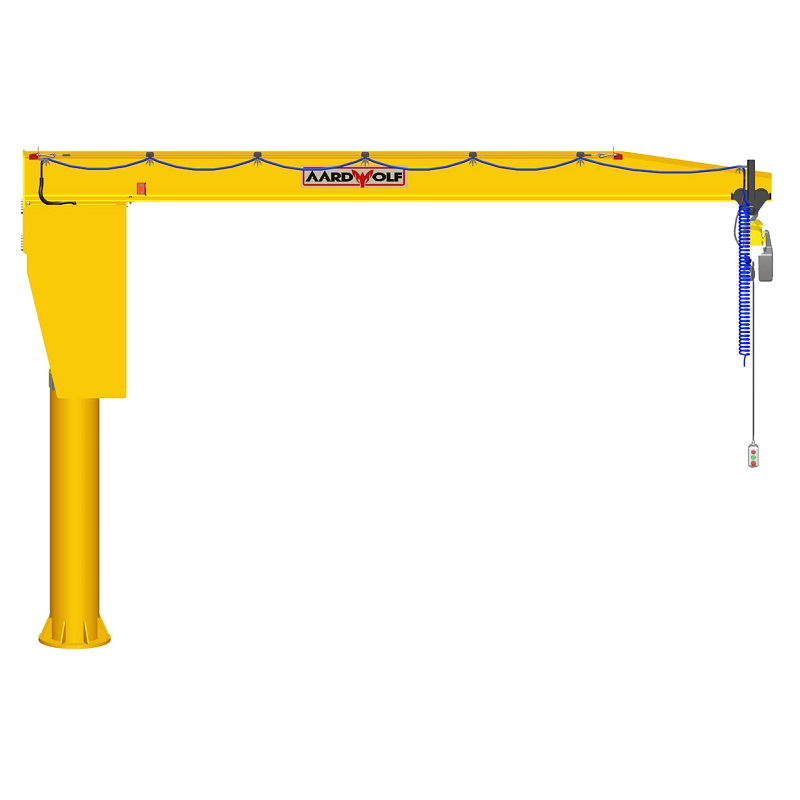
In workshops, factories, warehouses, and construction zones, jib cranes are often the fastest way to move heavy materials within a localized area. They’re compact, easy to operate, and ideal for repetitive lifting where a full overhead bridge crane would be overkill. But a jib crane’s real value depends on one specification more than any other: jib crane load capacity.
Capacity isn’t just a number on a nameplate. It determines what loads you can lift, how safely you can lift them, what type of hoist you can mount, how long the crane will last under daily use, and how efficiently your team can work. The same jib crane design can perform brilliantly in one application and struggle in another—simply because capacity doesn’t match real operating conditions.
This article explains how jib crane load capacity impacts common applications, how to choose the right capacity for different environments, and how to verify performance in the field.
Table of Contents
ToggleWhat “Jib Crane Load Capacity” Really Means in Daily Work
A jib crane’s rated capacity (often expressed in kg or tons) is the maximum load it can safely lift under specified conditions. However, the real load during lifting is rarely just the product weight.
In most common applications, you must account for:
- The load weight (part, pallet, tool, slab, machinery component)
- Rigging and lifting gear (slings, chains, hooks, spreader bars)
- Clamps or attachments used to grip the load
- Dynamic forces from lifting, stopping, swinging, or repositioning
- Off-center loading and shifting loads during rotation
That’s why engineers typically recommend selecting jib crane load capacity with a 10%–20% margin, especially for frequent use. A crane used for occasional lifts may need less margin; a crane used daily in heavy production may need more.
Why Load Capacity Changes How a Jib Crane Performs
It’s tempting to think: “If the crane can lift the load, we’re good.” But capacity affects performance and cost well beyond maximum lifting weight.
1) Safety and risk control
When lifts are near the limit, the crane experiences higher stress and deflection. That increases the risk of:
- overload events
- accelerated wear
- instability or uncontrolled swing
- operator error under pressure
2) Productivity and cycle time
If capacity is too low (or too close to the maximum), operators slow down:
- repositioning takes longer
- lifts require extra checks
- the hoist works harder and slower
- downtime becomes more frequent
3) Equipment life and maintenance frequency
The closer you operate to rated capacity—and the more often you do it—the faster components wear:
- bearings and pivot points
- hoist brakes and motors
- trolleys and wheels
- structural connections and anchor points
This is exactly why jib crane capacity planning must consider duty cycle (how often the crane lifts each day) and load severity (how demanding the lifts are).
How Jib Crane Load Capacity Impacts the Most Common Applications
Let’s break down the most common real-world use cases and explain how capacity shapes performance.
1) Machine Shops and Manufacturing Cells
Typical lifts: machine parts, tooling, motors, gearboxes, subassemblies
Common capacity range: 0.5 ton to 5 tons (sometimes higher)
Manufacturing plants rely on predictable movement: lift → rotate → place → repeat. In this environment, jib crane load capacity impacts:
- Workstation efficiency: right capacity reduces handling time
- Precision placement: stable lifting improves positioning accuracy
- Operator fatigue: proper capacity reduces manual intervention
- Crane longevity: undersized cranes wear out quickly
What happens if capacity is too low?
- operators “test lift” slowly, reducing throughput
- more frequent overload alarms or near-overload behavior
- hoist strain increases maintenance costs
Best practice
Choose a capacity that supports the heaviest regular lift plus rigging, then add a margin. If your manufacturing cell handles a variety of loads, prioritize the most frequent heavy lift, not the rare extreme load—unless that extreme load is a routine requirement.
2) Warehousing and Loading Bays
Typical lifts: crates, pallets, motors, metal stock, packaged products
Common capacity range: 0.25 ton to 3 tons (depending on industry)
Warehouses are all about throughput and safe movement in confined areas. Here, jib crane load capacity impacts:
- how quickly trucks are unloaded
- whether loads can be lifted in one pass or require splitting
- how safely operators can work around narrow aisles
Key capacity challenge: variability
Warehousing loads are rarely consistent. A facility might lift:
- small boxes one hour
- heavy equipment the next
- awkward loads with shifting center of gravity
Best practice
Build capacity around peak shipment weight, not average. That prevents “workarounds” that hurt productivity, such as moving loads in multiple steps or using manual labor for heavy items.
3) Maintenance and Repair Facilities (MRO)
Typical lifts: pumps, motors, valves, gear housings, machine components
Common capacity range: 0.5 ton to 10 tons
Maintenance operations may not lift continuously—but the loads can be heavy and unpredictable. In MRO, jib crane load capacity impacts:
- how quickly breakdowns can be repaired
- whether heavy components can be safely positioned at benches
- whether the crane can handle non-standard loads without risky rigging
What makes MRO different?
Loads are often:
- irregular in shape
- lifted at awkward angles
- removed from machinery with obstacles nearby
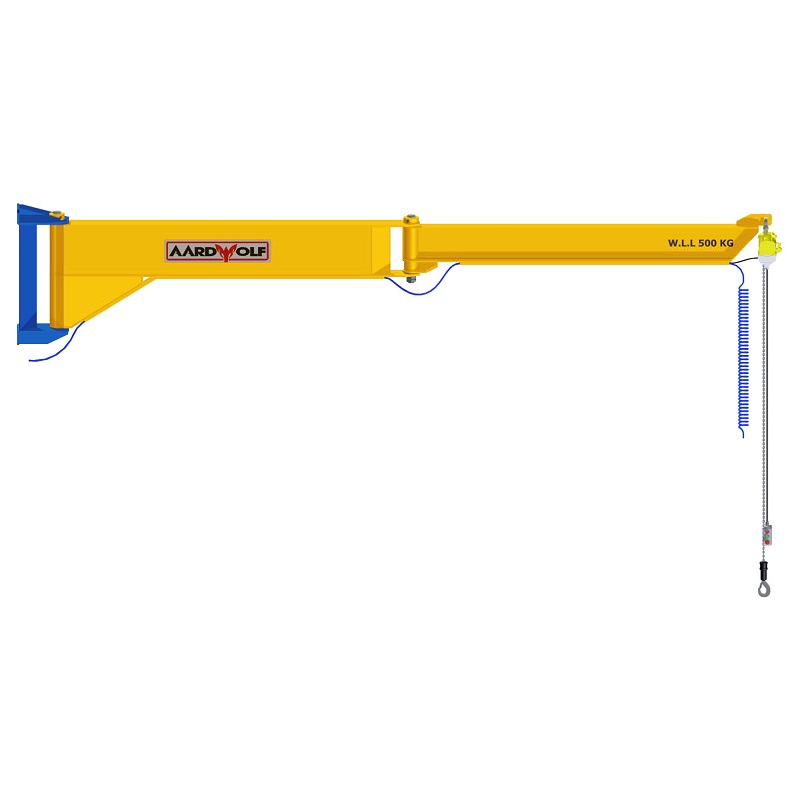
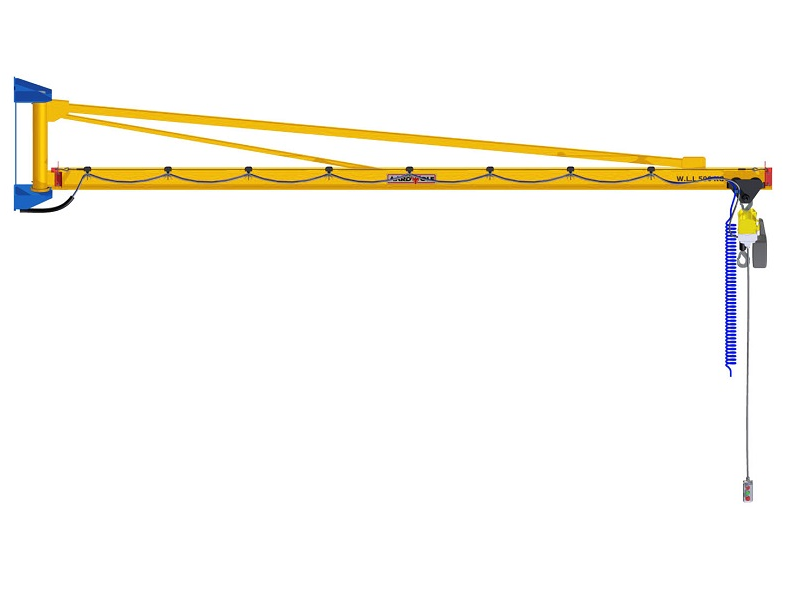
This is where articulated jib cranes can be a major advantage, because they provide reach and flexibility without requiring excessive capacity.
👉 Articulated option: Articulated Jib Crane – Wall Mounted
4) Construction and Site-Based Work
Typical lifts: building materials, tools, prefabricated components
Common capacity range: 1 ton to 10 tons (application dependent)
Construction environments introduce dynamic factors that significantly influence real capacity needs:
- sudden movements and swinging loads
- uneven lifting points
- outdoor exposure (wind, moisture)
- shifting ground conditions for portable systems
In construction, jib crane load capacity impacts:
- whether lifts remain stable under dynamic motion
- whether operators must “baby” every lift, slowing progress
- whether inspections and certifications are needed more frequently due to harsh use
Best practice
Capacity selection should be conservative, and lifting procedures should prioritize stability. On-site verification tools (like load cells) help confirm real performance when conditions change.
5) Stone, Glass, and Fabrication Work
Typical lifts: stone slabs, countertops, fabricated assemblies
Common capacity range: 0.5 ton to 5 tons (often higher for heavy stone)
In stone and fabrication applications, the load might not be “heavy” in tonnage—but it’s often awkward, fragile, and high-risk. Capacity impacts:
- whether lifts remain controlled during rotation
- how safely fragile edges are protected
- whether special clamps or spreaders can be used without exceeding capacity
This is also where the “real load” frequently includes specialized attachments.
If your workflow includes handling stone edges or joints, the lifting environment often involves precision positioning and support tools. (For example, operations that involve edge alignment and joining may also use tools like miter clamps or specialized handling setups.)
You can explore Aardwolf’s product range for lifting solutions and compatible systems here:
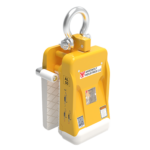
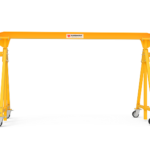
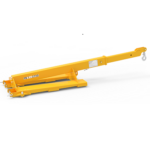
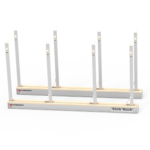
👉 more crane products
How to Select the Right Jib Crane Load Capacity for Common Applications
A practical selection process looks like this:
Step 1: List your heaviest typical loads
Don’t choose capacity based only on rare lifts—unless they happen frequently.
Step 2: Add rigging and attachment weight
Include clamps, spreaders, slings, and custom fixtures.
Step 3: Apply a margin
A common rule is 10%–20% above maximum working load for safety and flexibility.
Step 4: Account for duty cycle
A crane that lifts 2 tons once a day is different from a crane that lifts 2 tons 200 times a day. Frequent lifting may justify a higher-rated crane or higher-duty hoist system.
Step 5: Match capacity to mounting type
- wall-mounted: depends on structure strength and reinforcement
- floor-mounted: depends on foundation and anchoring
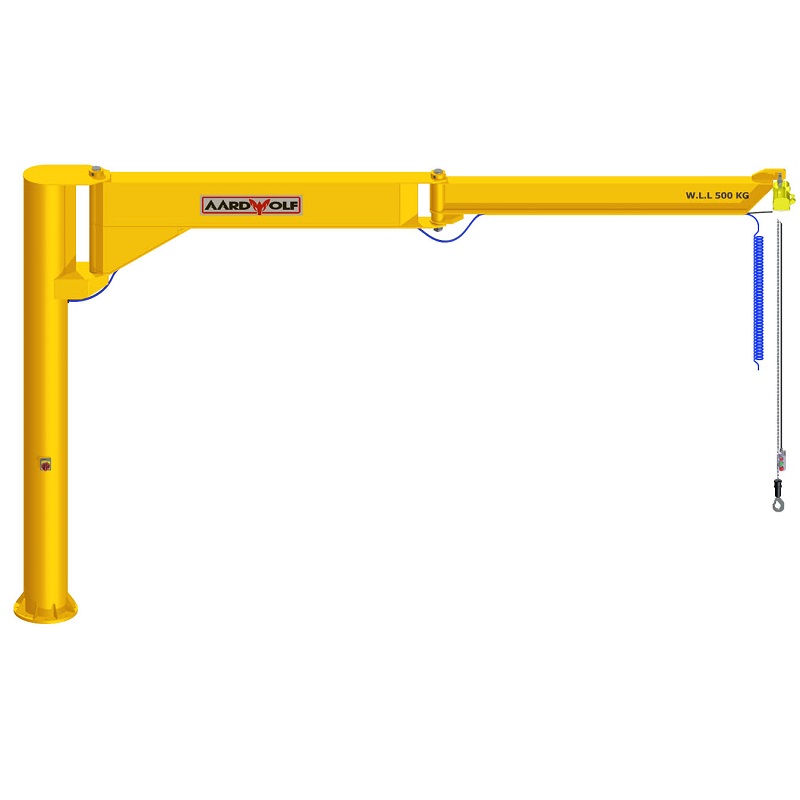
- mast-type: depends on floor and overhead support conditions
Verifying Capacity in Real Conditions: On-Site Tools Matter
Even if you choose the right rated capacity, real-world conditions change over time due to wear, repairs, relocation, or upgraded hoists. That’s why many facilities rely on load verification tools and testing practices.
To understand how capacity is validated in practice, use these supporting resources:
- What Jib Crane Load Capacity Tools Are Used On-Site
- How Jib Crane Load Capacity Affects Real-World Applications?
- How Jib Crane Load Capacity Shapes Industrial Applications?
Conclusion: Capacity Is the “Fit” That Makes Applications Work
Across common applications—manufacturing, warehousing, maintenance, construction, and fabrication—the jib crane load capacity you choose directly shapes safety, productivity, and long-term costs.
The best capacity isn’t always the highest. It’s the one that:
- handles your heaviest regular loads plus rigging
- supports your duty cycle without accelerated wear
- fits your space and mounting structure
- allows safe operation with a practical safety margin
- can be verified and maintained over time
If you’re comparing crane configurations or planning a new setup, start by reviewing Aardwolf’s jib crane range:
👉 more crane products
And if your application requires obstacle avoidance and precision placement in tight spaces, consider:
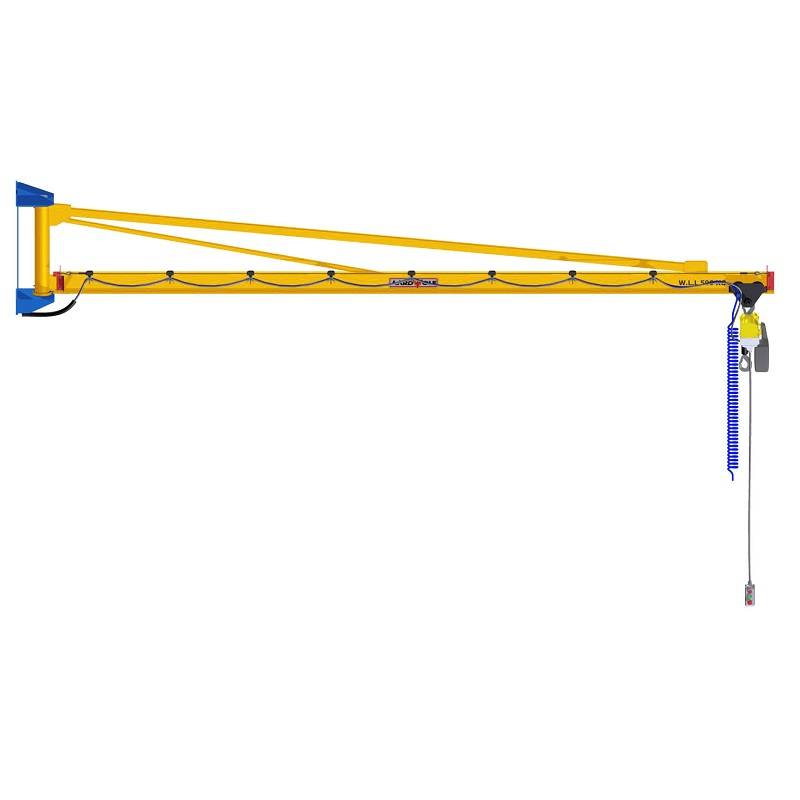
👉 Articulated Jib Crane – Wall Mounted
Please log in to leave a comment.